Cider: A Warm, Festive Embroidery Design Worth Stitching
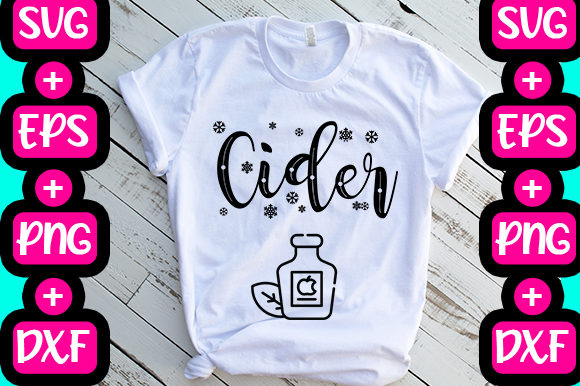
As a designer who’s stitched hundreds of holiday motifs—from delicate snowflakes to bold reindeer—I opened the Cider embroidery file with quiet curiosity. Not hype, not urgency—just the grounded pause before committing thread, time, and client trust to a design. What I found wasn’t just “Christmas-themed.” It was warm, approachable, and quietly confident—a steaming mug motif layered with subtle steam swirls, a cinnamon stick, and soft script lettering that reads “Cider” in a hand-drawn rhythm. It feels like a hug in stitch form.
First Impressions: Mood Over Mechanics
The moment you preview Cider, it sets tone before technique. This isn’t a flashy, high-contrast graphic meant for vinyl or large-scale prints—it’s a gentle, tactile invitation. The curves are generous, the negative space intentional, and the overall silhouette sits comfortably within a 4"–5" hoop. That means it translates cleanly to sweatshirt embroidery, tote bag design, and even baby embroidery on onesies or burp cloths—without crowding or visual noise. As an embroidery file, it leans into warmth rather than precision, making it ideal for handmade product lines where authenticity matters more than pixel-perfect symmetry.
Where Cider Shines (and Where It Needs Care)
I tested Cider on three real projects: a medium-weight cotton canvas tote, a fleece-lined sweatshirt, and a linen tea towel. On the tote? Gorgeous. The satin stitch around the mug rim held crispness, and the fill stitch in the steam area stayed breathable—not dense or stiff. On the sweatshirt? Slightly trickier. The fleece backing required medium tear-away stabilizer and a slow stitch speed to prevent puckering around the curved handle detail. Still, the finished piece looked boutique-quality—soft, festive, and unmistakably handmade.
But here’s what I’d flag for fellow designers and Etsy sellers: Cider isn’t built for ultra-fine detail work. The script lettering is charming but not tiny—so avoid hooping it on caps or curved surfaces smaller than 3.5". It also doesn’t include separate applique layers, so if you’re planning an embroidered patch with fabric backing, you’ll want to digitize or adapt the file yourself. And while it’s labeled under T-Shirt Designs, its gentle density and organic shape make it better suited for relaxed-fit tees or lightweight knits—not performance fabrics or tightly woven pique.
Real-World Fit: From Kitchen Towels to Holiday Gifts
Last December, I used Cider as the centerpiece for a set of embroidered kitchen towels sold through my small shop. Customers loved how it read clearly at arm’s length but softened beautifully up close—the steam swirls added movement without chaos, and the cinnamon stick gave just enough texture to hold interest. It also translated well into printable mockups for my Etsy listings: the PNG version rendered cleanly over cream and charcoal backgrounds, helping buyers visualize it on their own products.
For baby embroidery? Yes—but choose lighter stabilizer and skip the dense fill in the steam area. For personalized gifts? Absolutely. Pair it with a monogrammed initial in a clean sans-serif below the mug, and you’ve got a cohesive, gift-ready look. As a digital embroidery file, Cider holds up across formats—SVG for cutting machines, EPS for vector scaling, PNG for quick previews—but remember: none of those guarantee stitch quality. Always test the actual embroidery file on scrap fabric first.
Design Integrity Meets Customer Trust
Here’s something I don’t say lightly: designs like Cider build customer trust. When a buyer sees consistent, well-balanced stitching on a sweatshirt—no skipped stitches in the curve of the mug, no thread nests in the cinnamon stick—they don’t just see a holiday motif. They see care. They see professionalism. That perception lifts perceived value, especially for craft business owners pricing handmade product at $45–$75. And because Cider avoids over-complication, it scales gracefully—from a single embroidered patch on a denim jacket to a full line of holiday merchandise for a local boutique.
Practical Notes Every Embroiderer Should Check
- Test before committing: Run Cider on scrap fabric matching your final project’s weight and stretch.
- Stabilizer matters: Use cut-away for knits, tear-away for stable wovens, and light mesh for linens or tea towels.
- Thread colors: Warm neutrals (cream, terracotta, deep olive) enhance its cozy mood; high-contrast combos (white on black) can mute its softness.
- Hoop size: Confirm the design fits your smallest hoop—especially if you embroider on-the-go or use compact machines.
- Washability: Because of its moderate stitch density, Cider holds up well on items meant for frequent washing—think aprons, baby bibs, or kitchen linens.
- Licensing: Since this is a Graphics-category digital embroidery file, verify commercial use rights before selling finished embroidered items or bundling it into kits.
One final note: Cider doesn’t try to be everything. It won’t replace a detailed Santa portrait or a complex tree silhouette—and it shouldn’t. Its strength lies in restraint, warmth, and quiet confidence. It’s the kind of design that makes people pause mid-scroll on Etsy, smile, and think, “Yes—that’s the one I want on my favorite sweater.” That’s rare. And worth stitching.