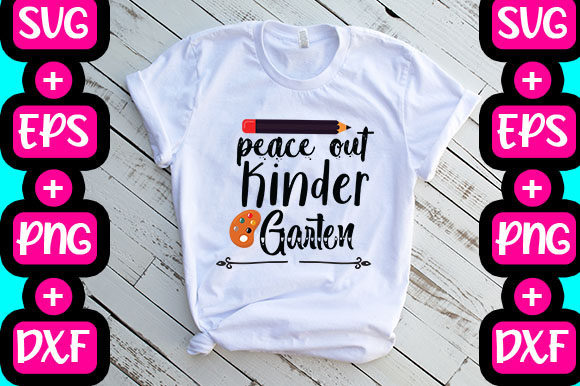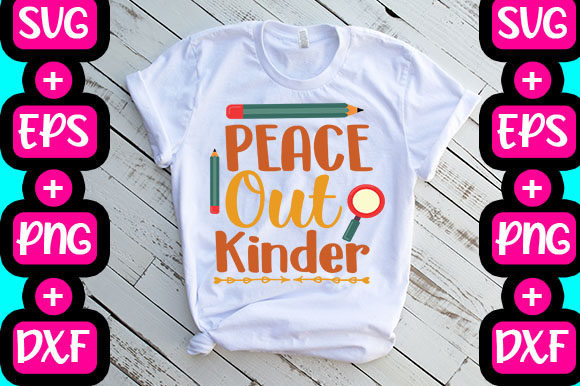
Peace out Kinder
A Designer’s First Glance: Playful, Not Precious
When Peace out Kinder popped up in my design library, I paused—not because it’s flashy, but because it *feels* intentional. It’s not trying to shout “school spirit!” or mimic clipart. Instead, it lands somewhere between a chalkboard doodle and a gentle classroom goodbye: soft curves, open letterforms, and that quiet confidence of a child who’s just mastered their name. As a designer who’s stitched hundreds of school-themed pieces—from kindergarten graduation caps to teacher appreciation totes—I immediately pictured it on a lightweight cotton apron for a preschool art room, or embroidered subtly near the hem of a baby onesie. It’s got warmth without saccharine, simplicity without emptiness.
Where It Shines (and Where It Doesn’t)
Peace out Kinder thrives in handmade product contexts where authenticity matters more than polish. Think: embroidered tea towels for back-to-school teacher gifts, linen pillow covers for a nursery wall, or custom patches sewn onto denim backpacks for first-day-of-school photos. Its clean lines translate beautifully into satin stitch borders and light fill-stitch lettering—no dense nesting, no micro-details that vanish under thread. That makes it forgiving on textured fabrics like terry cloth or looped cotton, and stable enough for lightweight knits when paired with medium-weight tear-away stabilizer.
But—and this is key—it’s not built for high-detail commercial embroidery runs. The “o” in “out” and the lowercase “k” in “Kinder” sit at the edge of legibility on small hoops (under 4”). On curved surfaces like baseball caps or toddler beanies, those rounded letters can distort if hooping isn’t precise. And while it reads clearly on light fabric, avoid using it full-size on dark garments without testing contrast: light thread on navy or charcoal can mute its friendliness unless you add an underlay or switch to a slightly heavier satin column.
Real-World Use: A Tote Bag Test Run
Last week, I prepped a set of organic cotton tote bags for a local Montessori co-op’s welcome event. I chose Peace out Kinder for the front left chest—small, centered, unobtrusive. I ran a test on scrap fabric first (non-negotiable), checked stitch density (moderate, no thread buildup), and confirmed the design cleared my standard 4x4 hoop with room to spare. On the finished bag? It looked handmade—not mass-produced. Customers noticed it. One parent said, “It feels like something my kid drew.” That’s the win: Peace out Kinder supports brand consistency for small shops because it doesn’t scream “digital file”—it whispers “thoughtfully made.”
What Works Well
- Personalized gifts: Embroidered on a muslin drawstring bag or a gauzy swaddle blanket, it adds tenderness without clutter.
- Sweatshirt embroidery: Stitches cleanly on midweight fleece with cutaway stabilizer—no puckering, even across seams.
- Holiday embroidery: Paired with a simple leaf or star motif, it softens “Back to School” energy for early-fall gifting.
- Etsy seller appeal: Clean vector roots (SVG/EPS/DXF) mean easy resizing for digital mockups—and buyers trust clarity over complexity.
Use With Care
- Thin or stretchy fabric: Requires basting + stabilizer combo—running stitch outlines may shift without support.
- Dense layers: Avoid stacking it over heavy applique or puff embroidery; it loses visual weight.
- Frequent-wash items: Confirm thread colorfastness—light pastels hold up best on baby embroidery or kitchen towels.
- Commercial embroidery projects: Review licensing before bundling it into a paid digital embroidery file pack or shop-branded merchandise line.
Design Assets That Earn Their Place
As a reviewer who sifts through dozens of school-themed graphics each season, I judge Peace out Kinder not by how many files it ships with—but by how often I reach for it. It’s not a workhorse like a bold alphabet set, nor a showstopper like a detailed classroom scene. It’s the quiet collaborator: the design that elevates a plain sweatshirt into a personalized gift, turns a generic tote into boutique merchandise, and helps Etsy sellers stand out with sincerity instead of saturation.
Its strength lies in restraint. No excessive flourishes. No forced whimsy. Just balanced spacing, open counters, and rhythm that reads at a glance—even from across a crowded craft fair table. That builds customer trust: when your embroidered patch or baby onesie carries Peace out Kinder, people sense care in the composition, not just the stitching.
Your Practical Next Steps
Before cutting fabric or loading your machine:
- Run a test on scrap fabric matching your final project’s weight and texture.
- Check thread color contrast on both light and dark backgrounds—try black-and-white mockups to assess clarity.
- Verify hoop size compatibility; don’t assume it fits your smallest hoop without measuring.
- Inspect small corners and inner curves—especially the tail of the “g” and the crossbar of the “t”—for potential thread nesting.
- Confirm licensing terms if selling finished products or reselling digital embroidery files—this is a T-Shirt Designs–category graphic, but usage rights depend on the bundle’s license, not the category.
Bottom line? Peace out Kinder isn’t about perfection—it’s about presence. It belongs on things people hold, give, and keep. And in a market flooded with loud, trend-chasing graphics, that kind of quiet intention is rare. Use it well, test it thoroughly, and let it do what it does best: say hello, goodbye, and everything tender in between.