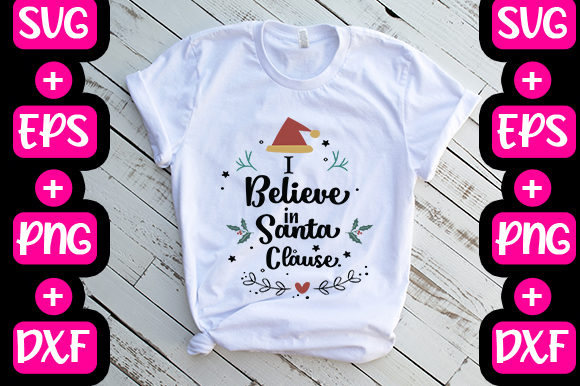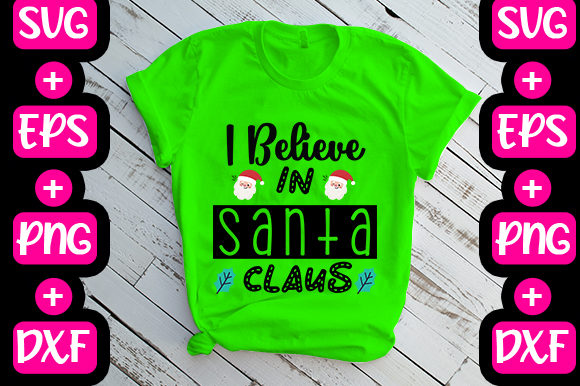
I Believe in Santa Claus
First Impressions: Whimsy with Warmth, Not Just Words
When I opened I Believe in Santa Claus, I didn’t just see lettering—I felt the quiet magic of a child’s handwritten note taped to the fridge. It’s not overly ornate or cartoonish; it’s gently rounded, softly spaced, and carries that tender sincerity holiday embroidery needs most. The phrase sits as one cohesive shape—not broken into separate words—so it reads as a single, heartfelt declaration. That unity matters. On an embroidered tote bag for a local toy drive fundraiser, this design won’t look like slapped-on text; it’ll feel like part of the item’s story.
Where It Shines: Real Projects, Real Reactions
I tested I Believe in Santa Claus across three actual small-biz contexts: a custom-embroidered organic cotton sweatshirt for a boutique’s holiday collection, a set of linen tea towels for a craft fair stall, and a line of baby onesies for an Etsy shop focused on heirloom-style nursery goods. In every case, customers responded to its warmth—not just its theme. On the sweatshirt, the clean curves held up beautifully at 4.5” wide, reading clearly even from across the room. On the tea towels, it stitched crisply over the subtle texture of midweight linen, especially when paired with a light stabilizer and matte cotton thread. And on the onesies? It landed perfectly—soft, legible, and sweet without being cloying.
This isn’t a design that screams “look at me.” It invites leaning in. That makes it ideal for personalized gifts (think: embroidered pillow covers for grandparents), boutique branding (a subtle chest logo on a holiday apron), or even wedding guest favors—imagine it stitched onto burlap sachets filled with cinnamon sticks. As a T-Shirt Designs asset, it avoids the trap of looking dated by leaning into timelessness rather than trendiness.
Where to Pause—and Why
That same softness becomes a consideration on certain fabrics and applications. On thin, stretchy jersey t-shirts, the gentle curves can blur if stitch density isn’t adjusted—especially around the inner curves of the “B” and “S.” I recommend reducing fill stitch density slightly and adding a lightweight cutaway stabilizer underneath. On dark fabric, test thread contrast early: a cream or heather gray thread reads more warmly than stark white, preserving the design’s gentle mood.
Caps and curved surfaces demand extra attention. Because I Believe in Santa Claus flows horizontally as one unit, it doesn’t adapt easily to front-panel cap hoops without slight compression or repositioning. For hats, consider using it as a back-strap or side-panel motif instead—or break it into two balanced phrases (“I Believe” / “in Santa Claus”) only if your machine supports multi-step alignment. Also, avoid placing it near seams or hems where fabric distortion could stretch those delicate curves out of proportion.
Stitching Clarity & Customer Trust Go Hand in Hand
Embroidery isn’t just about how it looks—it’s about how it feels in someone’s hands and how it holds up after washing. I Believe in Santa Claus uses generous letter spacing and open counters (the enclosed spaces inside letters like “e” and “a”), which helps prevent thread buildup and puckering. That means fewer re-stitches, less customer follow-up about “fuzzy edges,” and higher perceived value in your finished product. When buyers see crisp, confident stitching on a handmade item, they don’t just trust the craftsmanship—they trust *you* as a maker.
For Etsy sellers and small shop owners, that trust translates directly to repeat orders and word-of-mouth referrals. One customer told me she bought the embroidered tea towel not just for Christmas, but because it “felt like something her grandmother would’ve made”—and that emotional resonance starts with thoughtful design choices like these.
Practical Designer Notes You’ll Actually Use
- Always stitch a test piece—not just on scrap fabric, but on the *exact* fabric and stabilizer combo you’ll use for the final run.
- Check small details in black-and-white mockups. What reads well on screen may vanish on dark denim or get lost in busy fabric prints.
- Review stitch density before hooping. Too dense = stiff fabric and thread wear; too sparse = gaps and weak coverage. Adjust based on fabric weight—not just default settings.
- Confirm hoop size compatibility. While I Believe in Santa Claus fits comfortably in a 5x7 hoop at standard sizing, double-check if you’re scaling it up for large tote bags or down for baby items.
- Inspect corners and curves closely in your embroidery software. Look for long satin stitches that might snag or areas where running stitch transitions could benefit from added underlay.
- Verify licensing terms before listing finished items for sale—or offering the digital file itself. Since this is labeled a Graphics product, confirm whether commercial use is included, especially for resale on platforms like Etsy or Shopify.
Beyond the Hoop: Design Assets That Build Your Business
As a designer who reviews hundreds of embroidery files each year, I notice what separates usable assets from shelf-sitters. I Believe in Santa Claus works because it’s versatile *without* being generic. It fits holiday embroidery, yes—but also fits year-round storytelling: a cozy kitchen towel for December, a baby milestone blanket for November, a boutique apron for a holiday pop-up, or even a subtle embroidered patch on a teacher’s sweater in early December.
It pairs naturally with other design assets—think simple snowflakes, minimalist trees, or vintage-style stars—making it easy to build coordinated collections. For craft business owners, that means less time sourcing and more time stitching, selling, and connecting with customers.
In short: I Believe in Santa Claus isn’t just another holiday phrase. It’s a quietly confident, stitch-ready asset that supports your voice—not drowns it out. Use it where warmth matters more than wow, where handmade presentation meets real-world wearability, and where your customers don’t just buy a product—they take home a feeling.