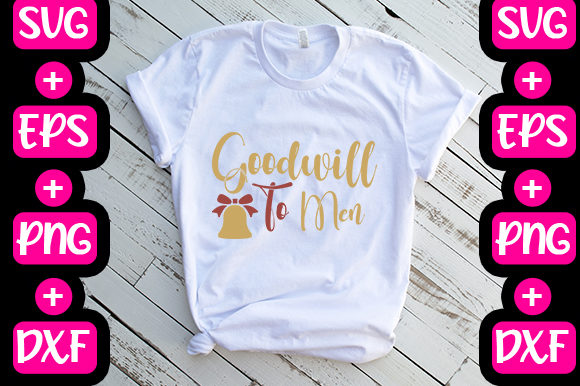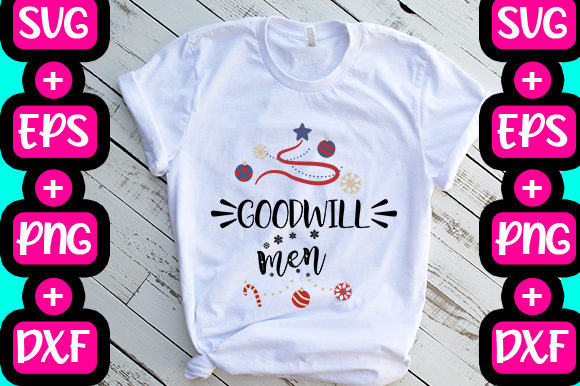
Goodwill to Men Graphics & T-Shirt Designs
A Brand Designer’s Real-World Review for Local Business Use
As a brand designer who’s helped over 80 small businesses—from neighborhood bakeries and indie candle studios to handmade soap makers and seasonal gift boutiques—I recently evaluated Goodwill to Men not as clipart, but as a potential graphic design asset for authentic local business branding. My test case? A winter pop-up series for “Hearth & Hemlock,” a Portland-based botanical skincare brand launching limited-edition holiday gift sets. I needed a warm, human-centered visual motif—not generic festivity—that could unify product labels, thank-you cards, social media banners, and reusable cotton gift tags.
First Impression: Warmth with Quiet Intention
Goodwill to Men lands softly but meaningfully. It reads as hand-drawn yet refined—neither overly ornate nor starkly minimal. The linework carries gentle rhythm; the composition suggests connection, generosity, and grounded celebration. It leans into organic elegance rather than commercial cheer. For local businesses, that’s gold: it feels handmade without sacrificing polish, festive without feeling dated, and inclusive without being vague. It suits brands rooted in care—think apothecary shops, slow-food cafés, children’s toy studios, or florists building emotional resonance over trend-chasing.
Where It Strengthens Real Small Business Branding
This graphic design asset shines where authenticity meets function:
- Product labels & packaging accents: Used as a subtle watermark on kraft paper soap boxes or foil-stamped on matte-finish candle jars, Goodwill to Men adds tactile warmth without overwhelming ingredient lists or certifications.
- Thank-you cards & printable inserts: Its balanced negative space allows clean pairing with serif typography (e.g., Lora or Playfair Display), making it ideal for handwritten-style notes inside boutique orders.
- Social media graphics: As a hero element in Instagram carousels or Pinterest pins, it anchors seasonal campaign visuals—especially when layered over neutral-toned product mockups (oat milk latte cups, linen-wrapped soaps, ceramic mugs).
- Stickers & hang tags: The SVG and EPS files scale flawlessly for die-cut vinyl stickers on reusable shopping bags or cotton twine hang tags for holiday wreaths or artisanal chocolates.
- Menu graphics & local event signage: At farmers’ market booths or café chalkboard menus, it serves as a decorative divider or corner flourish—enhancing visual hierarchy while reinforcing brand voice.
What This Asset Delivers Beyond Decoration
When applied intentionally, Goodwill to Men elevates more than aesthetics—it supports tangible business outcomes:
- Stronger first impression: On crowded shelves or scroll-heavy feeds, its thoughtful rhythm stops attention without shouting.
- Better product recognition: Consistent use across labels, stickers, and digital ads builds subconscious familiarity—critical for repeat local customers.
- Clearer visual hierarchy: Its moderate weight and open structure let key info (flavor names, ingredients, QR codes) breathe beside it.
- More consistent brand identity: Unlike one-off clipart, this asset functions as a flexible brand element—adaptable across mediums while holding tonal continuity.
- Improved customer trust: Its craftsmanship cues professionalism and care—subtly signaling that the business behind the product values intentionality.
Smart Application Zones (and Where to Pause)
Goodwill to Men works best as a supporting brand element—not the sole logo. Ideal placements include:
- Decorative borders on product mockups and printable packaging templates
- Subtle watermark textures on website banners or email headers
- Accent motifs on seasonal hang tags, sticker sheets, and gift wrap designs
- Hero graphics in Canva templates for holiday social campaigns
- Background flourishes behind short brand mantras (“Hand-poured • Locally Sourced • Thoughtfully Given”)
Use carefully in contexts where clarity or restraint is non-negotiable:
- Formal corporate branding (e.g., law firms or financial advisors)
- Labels under 1.5 inches tall—detail may blur in print
- Packaging with dense regulatory text or multilingual ingredients
- Luxury minimalist brands relying on extreme whitespace and monochrome palettes
- Backgrounds with low contrast (e.g., light gray on off-white)—test PNG transparency rigorously
Practical Brand Designer Notes for Real Projects
Before locking Goodwill to Men into your small business branding system, run these checks:
- Test it on actual packaging mockups—not just digital previews—to assess scale, bleed, and texture interaction.
- Print a black-and-white version: Does the line weight hold? Does it retain character at 0.75pt stroke?
- Preview it on small labels (1.25" x 1.25") using your intended production method (digital print vs. foil stamp vs. laser engraving).
- Layer it over your brand color palette—does it harmonize with both primary and accent hues?
- Compare side-by-side with top 3 local competitors’ holiday packaging—does it differentiate, not mimic?
- Inspect the SVG file: Are anchor points clean? Can you isolate and recolor individual elements without distortion?
- Test typography pairings: Does it balance well with serif (e.g., Merriweather), sans serif (e.g., Inter), script (e.g., Pacifico), and display fonts (e.g., Cinzel)?
- Verify commercial license terms—especially if applying to physical goods for resale (e.g., branded mugs, tote bags, or T-shirt Designs).
For creative entrepreneurs building real local business value—not just filling design blanks—Goodwill to Men is more than a digital product. It’s a versatile, emotionally intelligent graphic design asset. When treated as part of a considered brand identity—not decorative afterthought—it helps handmade businesses, food labels, boutique visuals, and seasonal campaigns feel human, memorable, and unmistakably theirs.