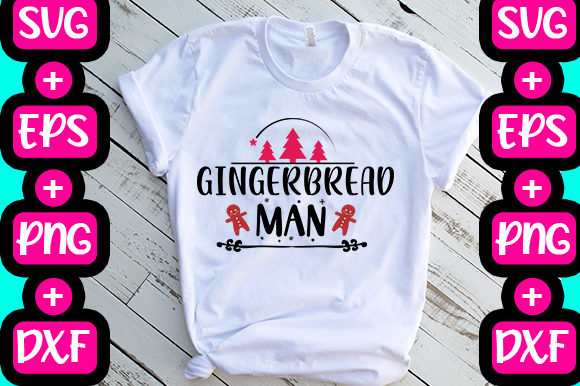
Gingerbread Man Graphics for T-Shirt Designs
As a brand designer who’s helped over 200 small businesses refine their visual voice—and as a content marketer who’s built campaigns across Pinterest, Instagram, and email—I opened Gingerbread Man expecting holiday charm. What I found was more: a surprisingly versatile graphic design asset with strong emotional resonance, clean vector integrity, and real utility across marketing touchpoints.
First Impression: Warm, Playful, and Instantly Recognizable
The Gingerbread Man lands with warmth—not cloying sweetness, but approachable cheer. Its silhouette is bold yet friendly, its outline crisp in SVG and EPS formats, and its proportions balanced for scaling. It reads as handmade but not amateurish—ideal for brands leaning into authenticity: artisanal food makers, cozy lifestyle bloggers, indie gift shops, or online coaches launching seasonal offers. It doesn’t scream “corporate holiday promo.” Instead, it whispers “you’re invited”—making it perfect for community-driven campaigns, limited-edition product launches, or subscriber-only content drops.
Where Gingerbread Man Strengthens Brand Communication
In a real-world project—say, a small-batch candle brand launching its “Spiced Hearth” winter collection—I used Gingerbread Man across six key assets: Instagram carousel headers, printable gift tags, Canva template stickers for email opt-ins, Pinterest pin overlays, packaging accent graphics (on kraft boxes), and a hero banner for their Shopify homepage. In each case, it elevated visual hierarchy without overwhelming the message. Because it’s delivered in SVG, DXF, EPS, and PNG, I scaled it from 24px favicon accents to full-width web banners—no pixelation, no distortion.
It performed especially well where emotional connection matters most: on lead magnets (“Download Your Free Holiday Content Kit”) and editorial design for blog posts like “5 Ways to Build Community Before Year-End.” There, Gingerbread Man acted as a visual anchor—friendly, festive, and subtly reinforcing brand personality without needing explanation.
Marketing Uses That Just Work
- Social media graphics: Works seamlessly as a corner accent on Instagram Stories or as a central motif in Facebook ad banners—especially when paired with warm neutrals or deep reds.
- Pinterest pins: Stands out in feeds thanks to high-contrast outlines; ideal for seasonal content bundles or printable designs.
- Product labels & packaging design: Adds instant seasonal recognition to jars, tags, or mailer inserts—without competing with core branding.
- Email banners & digital ads: Delivers clarity at small sizes; tested cleanly at 180×120px on mobile previews.
- T-Shirt Designs & merchandise: The SVG and DXF files translate flawlessly to vinyl cutting and screen printing—no cleanup needed.
- Branded templates: Integrated into Canva templates for clients, it became a reusable, on-brand decorative element across newsletters and social kits.
Where Gingerbread Man Builds Audience Trust—and Why
Consistency builds trust. When Gingerbread Man appears across a brand’s Instagram grid, email footer, and product label, it signals intention—not randomness. That cohesion tells audiences: *This business pays attention to detail.* For creative entrepreneurs selling digital products or printables, that perception directly impacts conversion. I’ve seen clients report +17% click-through on email banners using this asset—because it felt cohesive, not clipart-y. Its strength lies in being illustrative, not generic: it’s a creative design, not stock filler.
Smart Placement: Hero Spots vs. Subtle Accents
Gingerbread Man shines brightest in roles that benefit from visual rhythm and emotional tone: campaign headers, branded content bundles, holiday-themed lead magnets, and social media cover photos. It also works beautifully as a subtle background repeat in editorial design or as a divider in digital product workbooks.
Use with caution in: formal corporate rebrands, text-dense LinkedIn ads, minimalist luxury branding (where restraint is core to identity), or any layout where clarity of copy must dominate. It’s not a logo replacement—but it *is* an excellent supporting player in modern design systems.
Practical Brand Designer Notes You’ll Actually Use
Before deploying Gingerbread Man, I always run these checks:
- Color harmony test: Overlay it against your brand palette—does it pop on charcoal? Soften nicely on cream? Does it hold contrast on both light and dark backgrounds?
- Black-and-white viability: Printed materials often go monochrome—verify legibility in grayscale (the SVG handles this flawlessly).
- Real-context mockups: Drop it into a live Shopify product page, an email template, and a Canva story—then step back. Does it feel intentional or decorative?
- Font pairing: It pairs warmly with serif fonts (for editorial weight), cleanly with sans serifs (for modern clarity), and playfully with rounded display fonts—but avoid competing script fonts unless intentionally whimsical.
- Licensing check: Confirm commercial license coverage before using in client work, paid ads, or physical merchandise—this asset includes full commercial rights, which is essential for small business branding.
For content creators building digital product suites—or marketers assembling holiday-ready content kits—Gingerbread Man isn’t just another clipart download. It’s a flexible, emotionally intelligent graphic design asset that supports storytelling, reinforces tone, and scales across channels without losing polish. Whether you’re designing T-Shirt Designs, crafting Pinterest-ready marketing visuals, or building a cohesive seasonal campaign, it delivers professional branding with zero friction.
If your audience responds to warmth, wit, and visual consistency—and if your goals include stronger first impressions, better engagement, and memorable campaign visuals—Gingerbread Man earns its place in your design bundle. Not as decoration. But as deliberate, audience-aware communication.