Garland Graphics: T-Shirt Designs for Local Branding
As a brand designer who’s helped over 70 local businesses—from artisanal bakeries to handmade candle studios—build cohesive, shelf-ready identities, I opened Garland expecting seasonal clipart. What I found was a surprisingly versatile graphic design asset with quiet strategic potential—if used intentionally.
I recently reviewed Garland while developing packaging and social media visuals for “Hearth & Thyme,” a small-batch herbal tea brand launching its first holiday collection. Their aesthetic is warm, grounded, and quietly elegant—think linen labels, cream kraft boxes, and hand-lettered typography. Garland landed right in that sweet spot: festive without being cliché, decorative without overwhelming, and detailed enough to feel intentional—not generic.
A Mood That Builds Trust, Not Just Cheer
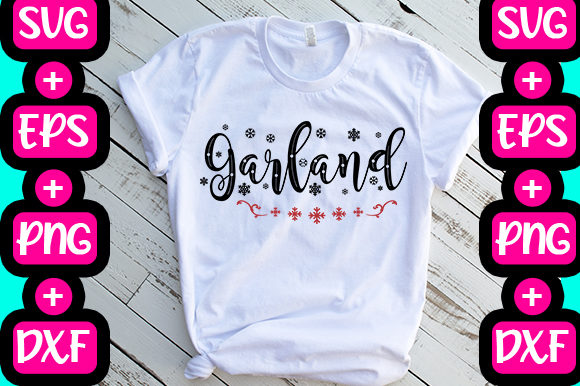
Garland reads as handcrafted but precise: soft curves, balanced negative space, and subtle texture cues (visible in the high-res PNG and editable SVG layers). It doesn’t scream “Christmas”—it whispers “seasonal warmth.” That makes it ideal for food businesses, skincare brands, florists, or home decor shops that want holiday relevance without locking themselves into a single month of marketing.
It leans organic, not cartoonish; refined, not rustic; inviting, not overly playful. For a local coffee roaster adding limited-edition holiday bags, Garland works beautifully as a wrap-around band accent—not as the main logo, but as a tactile, memorable detail that signals care in craft.
Where Garland Earns Its Place in Real Business Design
This isn’t just clipart for cards or vinyl decals. When applied thoughtfully, Garland strengthens core elements of small business branding:
- Product labels: Used as a top-border flourish on tea tins or soap jars, it adds visual hierarchy and signals seasonality at a glance.
- Packaging accents: On matte-finish gift boxes or belly bands, it elevates perceived value—especially when paired with uncoated paper stock and soy-based ink.
- Social media graphics: As a subtle watermark or corner motif in Instagram carousels or holiday promo banners, it creates continuity across posts without competing with product photography.
- Thank-you cards & printable inserts: Its clean vector scalability means it prints crisply at 4” × 6” or full-sheet size—ideal for boutique welcome kits or farmers’ market giveaways.
- Menu graphics & price lists: A scaled-down version anchors seasonal specials on café chalkboard-style menus or laminated countertop displays.
Because Garland comes in SVG, EPS, DXF, and transparent PNG, it adapts seamlessly across production methods: laser-cut wood tags, screen-printed tote bags, foil-stamped hang tags, or digital ads—all part of the same unified brand identity.
Where to Lean In—and Where to Pause
Garland shines brightest where decoration supports meaning—not replaces it. Use it confidently on:
- Hero graphics for holiday landing pages or email headers
- Decorative borders on product mockups (especially for Canva templates or Shopify store visuals)
- Seasonal packaging accents—think ribbon replacements, box lid motifs, or sticker seals
- Boutique window decals or shelf talkers with breathing room
- Social media campaign assets where mood > message density
Use with caution on:
- Ingredient-heavy food labels (where clarity trumps ornament)
- Small-format hang tags under 1.5” wide (test legibility—fine details may blur)
- Luxury minimalist brands (e.g., high-end skincare) that rely on stark contrast and restraint
- Backgrounds with low-contrast tones (verify PNG transparency holds up on light beige or sage green)
- Legal disclaimers or regulatory text zones—never place Garland where it competes with required information
Practical Designer Notes You’ll Actually Use
Before dropping Garland into your next local business project, run these quick checks:
- Test on real packaging mockups—not just digital previews. Print a 2” version on your label stock to verify line weight and spacing.
- Check black-and-white usage: Does it retain shape and impact when stripped of color? Essential for embossing or single-color print runs.
- Preview at actual label sizes: Zoom to 100% on a 1.25” x 2” sticker mockup—does the flow still read clearly?
- Pair it with your brand fonts: Try it beside serif (e.g., Playfair), sans serif (e.g., Inter), script (e.g., Pacifico), and handwritten options. Note where contrast feels intentional vs. chaotic.
- Verify commercial license terms before applying to client work, physical product sales, or trademarked branding—this is non-negotiable for professional branding.
- Inspect SVG layer structure: Are paths clean and grouped logically? This matters for editing in Illustrator or resizing in web design contexts.
- Compare against competitor packaging on a shelf mockup—does Garland help your client stand out, or blend in?
For handmade businesses especially, Garland bridges the gap between digital convenience and tangible craft. It’s not just a T-Shirt Designs download—it’s a ready-made piece of visual language that says, “We pay attention to detail,” without needing custom illustration budgets.
In the end, Garland isn’t about adding more decoration. It’s about adding intentional recognition. When your customer sees that same delicate motif on their soap label, their thank-you card, and your Instagram Story highlight, they’re not just noticing a pattern—they’re sensing consistency, care, and quiet confidence. That’s how small business branding earns trust, one thoughtful detail at a time.